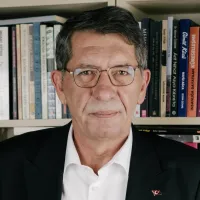
Hasan Çapan | President of the Türkiye-China Friendship Foundation
With the comprehensive military operations launched by the United States and Israel against Iran on February 28, 2026, the Middle East is witnessing an unprecedented rupture in the political and security architecture of a geography whose borders were drawn a century ago. Reading the current landscape merely as a spiral of conflict would be incomplete; for the unfolding events reveal the collapse of the myth of "Western protectionism" imposed on the region for decades and the structural shift in global power balances.
From Sykes-Picot to the Present: The Security Umbrella is Broken
As will be remembered, during his previous presidency, Donald Trump disclosed a rather striking truth regarding the Gulf states, stating that he had told King Salman, "Without the security umbrella we provide, you wouldn't last even two weeks." The regional countries, whose borders were artificially drawn by Western powers with the Sykes-Picot Agreement following World War I and whose rich hydrocarbon resources were integrated into the strategic control of the West, were condemned to this asymmetric security relationship for many years. While the West utilized the region's natural resources for its own economic wheels, it promised regime security in return. However, the ongoing Iran War has once again proven just how hollow this promise was. With the onset of the war, Iran's ability to target US bases in the region and structures housing US-Israeli military/intelligence personnel has clearly demonstrated that Washington actually struggles to protect even its own bases, and thus cannot provide absolute security to the regional countries.
Media Blackout and Military Realities on the Ground
This strategic collapse is being concealed from global public opinion through heavy censorship and manipulation by global media networks. For example, as closely monitored by military strategy experts, the strategic withdrawal of US aircraft carrier task forces and naval elements in the region to safer waters in order to avoid Iran's asymmetric naval assets and ballistic missile range as conflicts escalated, has not found the coverage it deserves in mainstream Western media. This tactical retreat is a historical piece of data in terms of illustrating the limits of Western deterrence in the region.
Institutional Paralysis
In the face of Israel's destructive and disproportionate attacks that set the region ablaze and cost the lives of tens of thousands of civilians in defiance of international law, the mere issuing of condemnation messages by institutions like the Organization of Islamic Cooperation and the Arab League is no longer a sustainable policy. These institutions must convene urgently and announce concrete sanctions to halt Israel's aggression; they must produce structural remedies to prevent the US from manipulating regional countries for the sake of its own geopolitical and economic interests. The region cannot abandon its fate to external interventionists.
The Strategic Tenacity of Türkiye and Azerbaijan
Türkiye and Azerbaijan are among the primary actors facing the most critical test against the risk of the war regionalizing. Since the beginning of the conflicts, Ankara and Baku have been targeted to be dragged into the crisis through provocative missile attacks and false flag operations organized by Israel and Western actors who wish to spread the war across the region. However, the prudent political leaderships, deep-rooted state traditions, and strong military intelligence structures of both countries have successfully thwarted these traps thus far. Türkiye and Azerbaijan have proven to be the guarantors of peace by pushing diplomatic channels for the immediate cessation of conflicts and the restoration of regional stability.
Global US Bases and the Unanswered Questions in Alexandroupolis
This dangerous dimension reached by regional crises indicates that the time has long come to question the approximately 900 US bases around the world. It is now inevitable for the international community to open these structures to debate, none of which pursue a goal of peace and which operate almost as epicenters of malice and crisis, let alone bringing stability to the regions where they are located. Within this global network, there is one particular base whose function and ultimate purpose are monitored with concern by regional experts: the US base located in the Alexandroupolis region of Greece, situated a mere 37 kilometers from the Turkish border. A continuous and heavy military buildup has been taking place at this location for a long time. When the geopolitical position of the region is examined, it is clearly evident that the only country this base and buildup could target is Türkiye. This picture brings a highly critical question to mind: Could the motivation behind this extraordinary military buildup in Alexandroupolis be a preparation for a planned foreign intervention following a potential severe earthquake disaster in Türkiye, particularly in Istanbul? The raison d'être of the Alexandroupolis base and the true purpose of the military mobility there urgently and transparently need to be explained in terms of Türkiye's national survival.
The Peaceful Alternative and the Multipolar Future
In the face of all this destruction and the landscape of containment, the foreign policy vision of the People's Republic of China, which stands out as the US's greatest systemic rival on a global scale, offers a rational alternative for the regional countries. China's greatest difference from the West is that its foreign policy is closed to the influence of structures such as Zionist lobbies, and it absolutely rejects a mindset that embraces military interventions causing harm to civilians and leading to massacres indiscriminately of the young, old, or children for the sake of accessing natural resources. This diplomatic sensitivity China has demonstrated to date is the strongest guarantee that it will not resort to imperial methods for natural resources in the future either. Just like China, Türkiye has stayed away from adopting a colonialist and aggressive mindset in its foreign policy, rejecting the approach of building prosperity upon the decimation of other nations. In this respect, Türkiye's foreign policy vision is in harmony with the opportunity to create new peaceful alternatives before the world.
Conclusion: From Unequal Relations to Independence
At this historical threshold we are passing through, the new world order is rapidly evolving into a multipolar structure. There is only one way for the regional countries, subjected to the asymmetric attacks, interventions, and manipulations of the US, to break free from this web of unequal and dependent relations and to act as fully sovereign actors. This path, which has also become thoroughly distinct before Türkiye, is to converge with countries like China that prioritize global stability and pursue a peaceful foreign policy, and to urgently develop economic and security cooperations within platforms such as the Shanghai Cooperation Organisation and BRICS against the aggressive Western bloc. The lasting peace of the Middle East will be built with the East's development-oriented vision of stability against the crisis-producing policies of the West.